Written by Autumn Madden, ATR-P, LPC-IT
In this Internal Family System blog series we’ve been exploring managers, firefighters, exiles, and the Self. Together, these parts make up the internal family system, which influences how we think, feel, and respond to the world around us. In parts work, the goal is not to eliminate any part, but to build understanding and connection between the Self and our parts. When the Self begins to lead the system, protectors can take on healthier roles and Exiles no longer have to carry their burdens alone.
For many people, art therapy can be a powerful way to explore these inner parts.
Our parts can often communicate through images, sensations, emotions, and symbols. Creative expression and the externalization of the parts can bring an increased awareness to what is happening internally. Drawing, painting, or sculpting can give our parts a safe way to share their experiences in ways that words sometimes cannot.
Through both parts work and art therapy, people can begin to develop a compassionate and caring relationship with their inner system. Over time, this process can support healing, deeper self-understanding, and greater balance within.
Art Therapy Exercise to Explore Your Parts
Below is a gentle art therapy exercise invitation to help you notice and connect with your parts. This exercise begins with a simple parts meditation, a body-based creative exploration, and a short reflection. This exercise can help you begin to notice where different emotions or parts might live within your body.
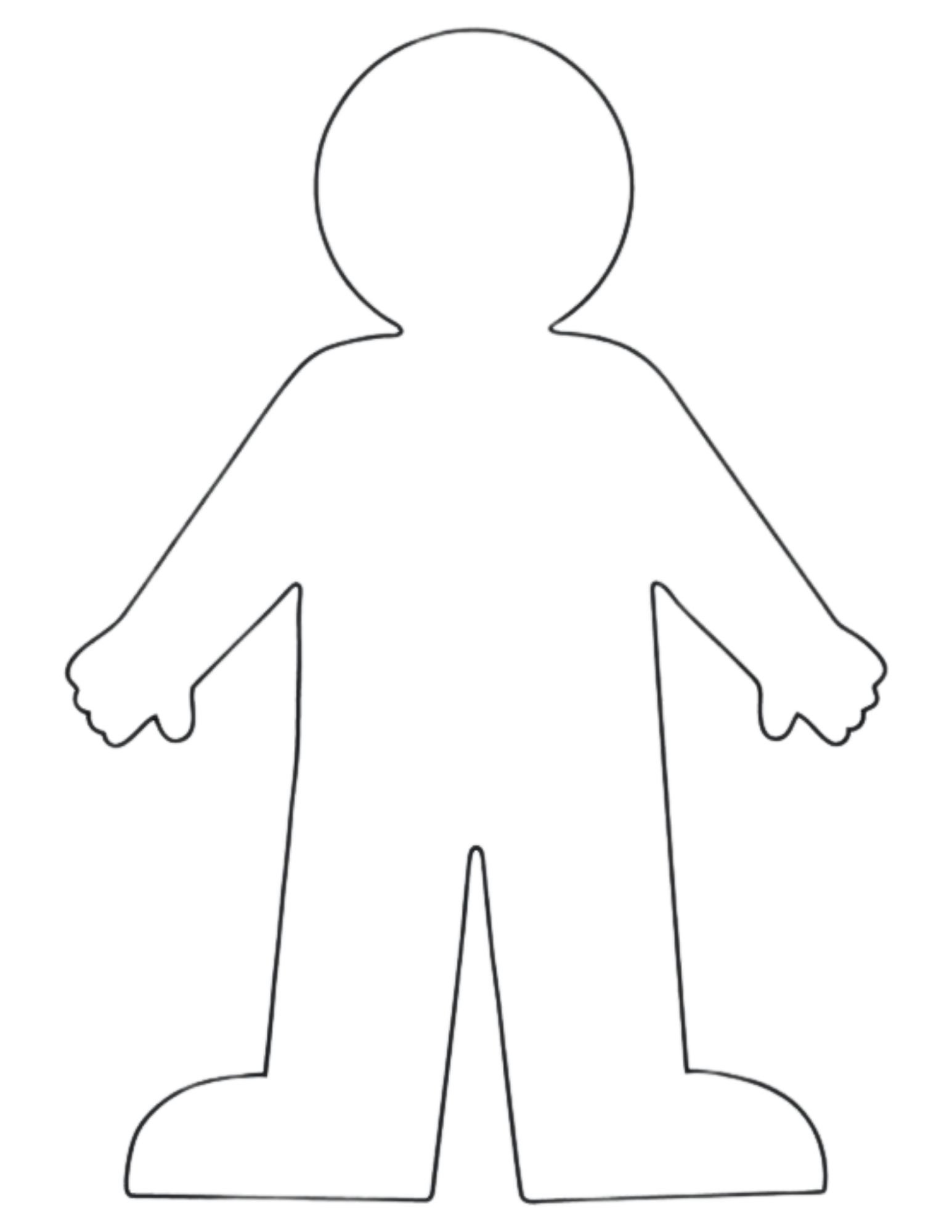
I invite you to find a quiet space, gather simple materials like pencils, colored pencils, markers, or crayons. You can also download the printable body outline below.
There is no right or wrong way to engage with this exercise. The goal is to simply approach your inner system with curiosity and care.
Art Therapy Exercise: Parts Mediation
Take a moment to settle into a comfortable position.
You may close your eyes or soften your gaze.
Begin by taking a few deep breaths.
Notice the coolness of the air as it enters your body.
Notice the warmth of the air as it leaves your body.
Now gently bring your attention inward.
Do you notice any bodily sensations?
Do you notice any thoughts or inner voices trying to engage?
Do you notice any images, feelings, or emotions?
There is no need to force anything to appear.
Simply notice what comes up naturally.
If something arises, see if you can approach it with curiosity rather than judgment.
What might this part be feeling?
Where do I notice it in my body?
What might this part want me to know?
Now slowly scan from the top of your head down to your feet, noticing where you feel sensations, tension, warmth, heaviness, or emotion.
Spend as much time here as you need…
Take a few more deep breaths.
Notice the coolness of the air as it enters your body.
Notice the warmth of the air as it leaves your body.
When you feel ready, begin to gently open your eyes or soften your gaze and return back to the present moment.
Art Therapy Exercise: Body Mapping
Now take your paper or the printable body outline.
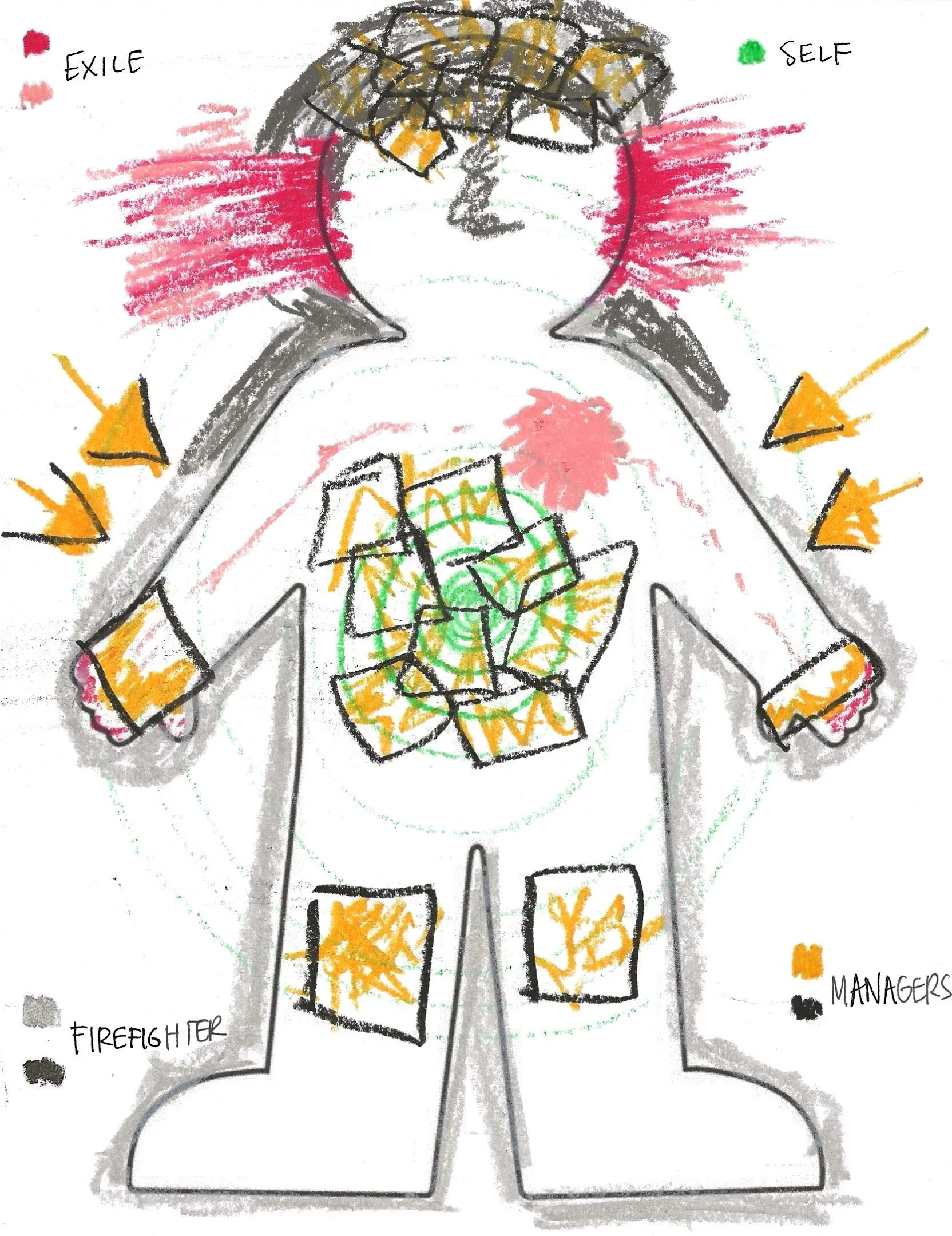
Using color, shapes, symbols, or words, begin to represent what you noticed in your body. Remember all parts are welcome!
Pick one sensation to focus on at a time. What color does the sensation or emotion feel like to you? What image or symbol might represent the sensation or thoughts? Continue with each sensation that comes up for you.
Different areas of the body may represent different parts. You can even begin to name and identify a part, or write down a few thoughts connected to it.
Allow the drawing to be more intuitive rather than planned. You are invited to check inward with the parts again if needed. This is an opportunity to creatively express what your body and parts might be communicating through color, images, and symbols.
Art Therapy Exercise: Reflection Questions
Once your drawing feels complete, take a moment to reflect on the following:
What parts of me showed up in this exercise?
Where did I notice these parts in my body?
What emotions might these parts be carrying?
How do I feel toward these parts?
Is there anything these parts want me to know?
It can be helpful to journal in response to these prompts, integrating insights and learning that can be referred to again at another time.
If strong emotions arise during this exercise, it can be helpful to pause, take a few deep breaths, and ground yourself to the present moment. Find 5 things you can see, 4 things you can touch, 3 things you can hear, 2 things you can smell, and 1 thing you can taste. Exploring parts can sometimes bring up strong emotions, and working with a therapist can provide additional support.
If you are interested in exploring Internal Family Systems, parts work, or art therapy, working with a therapist can help you safely and gently get to know your internal system.

Autumn Madden, ATR-P, LPC-IT
Autumn is an IFS-informed art therapist in Cedarburg, Wisconsin, and is currently accepting daytime clients. She would love to support you in exploring your inner parts through curiosity, creativity, and compassionate care.
References
Schwartz, R. C. (2023). Introduction to internal family systems (2nd ed.). Sounds True.
IFS Learning Hub. (2025). IFS Online Circle [Online training program]. https://learn.ifs-institute.com/programs/fall-2025-ifs-online-circle/
explore Autumn’s entire IFS + Art Therapy blog series
